
Introducing
Spectra-Sense
From Monitoring
To Performance
|
Manage your Infrastructure and pipelines network through fiber optic monitoring technology.
spectrasense is Pioneering the Future of Distributed Acoustic Sensing (DAS)
WHAT IS DAS?
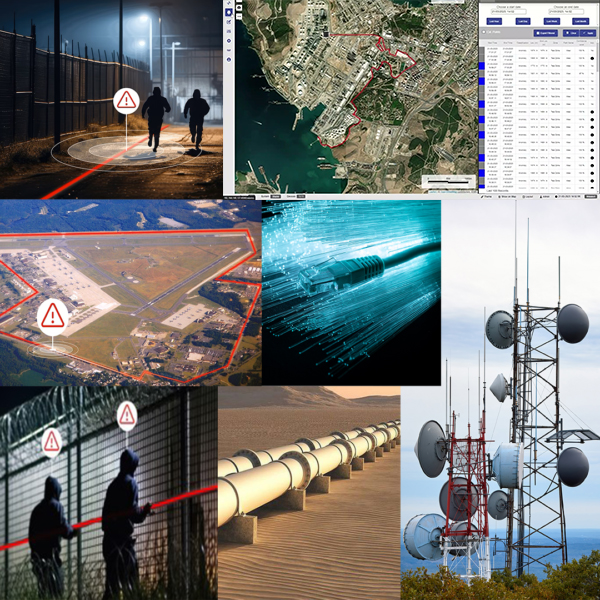
Distributed Acoustic Sensing (DAS) is a cutting-edge solution that transforms standard fiber optic cables into highly sensitive acoustic sensors capable for detecting and identifying potential security threats in real time.
Working Principle
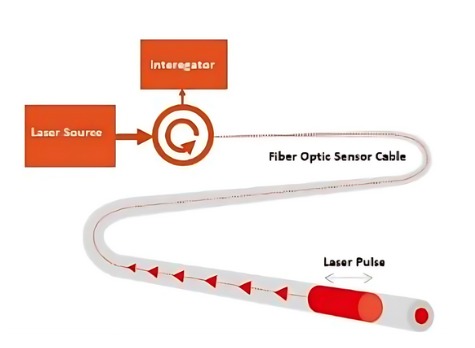
Acoustic effects change the scattering of the light waves inside the fiber optic cable, These instantaneous changes are measured by backscattered lights, In this way, the fiber optic cable becomes a distributed sensor along the cable.

![550LE[1][1]](https://spectrasense.io/wp-content/uploads/2025/03/550LE11-768x576.png)
Unlock the Power of spectrasense for Smarter Monitoring
Our Solutions
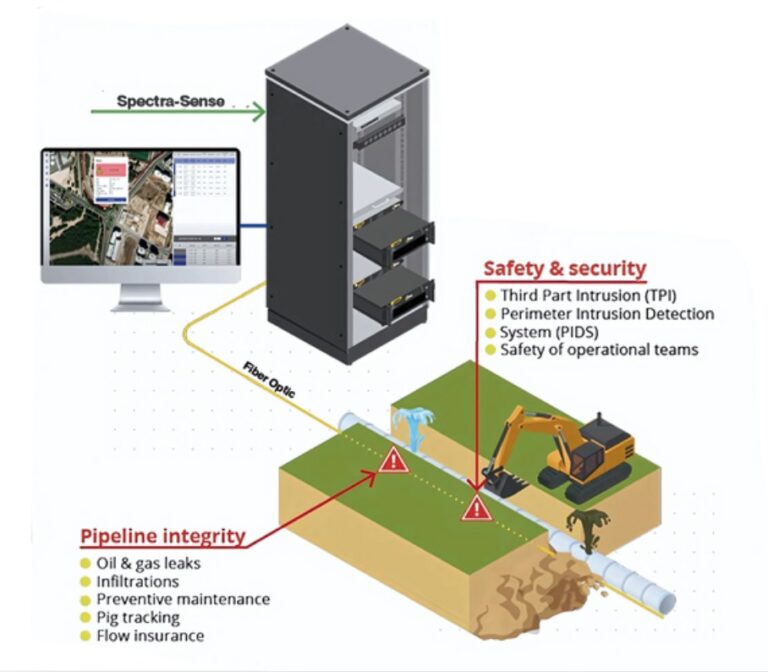
Harness the potential of Distributed Acoustic Sensing (DAS) to enhance security, efficiency, & real-time insights across industries. Our innovative solutions transform fiber optics into a powerful sensing network, delivering precision-driven results.
Advanced Technology, Precise Results
SPECIFICATIONS
Precision-engineered with advanced spectral sensors and AI-driven analytics, ensuring accurate real-time monitoring and data interpretation for diverse applications.
REMOTE ACCESS
SECURITY CAMERA INTEGRATION
REDUNDANCY (Fiber Cut Immunity)
ACCURACY (5 Meters)
FUTURE EXPANSION
RESPONSE TIME (Less Than A Second)
SENSITIVITY (User Adjustable)
SCADA INTEGRATION
WARRANTY (Extended Upto 3 Years)
DETECTION RANGE (Upto 40km)
Stay updated with the latest in Distributed Acoustic Sensing (DAS).
Latest Insights & News
Explore expert analysis, industry trends, and the latest developments in DAS technology.
Exploring Atlanta’s modern homes
Green interior design inspiration
Collar brings back coffee brewing ritual
When it’s about controlling hundreds of articles, product pages for web shops, or user profiles in social networks, all

Delivering Excellence Through Innovation and Precision
Why Spectrasense?
Same fiber for sensing and transmission
No Power required on
field
Immunity to RF noise & EMI interference
Accurate event classification & localization
24/7 Real-time
monitoring
Non-flammable and chemically inert
Long sensor
life
Low
maintenance
GIS-Based customized
mapping
Post Commissioning Support (SLA)
Data logging & automated report generation
our certifications
Our certifications reflect our commitment to excellence, security, and compliance.

ISO 27001 Certified
"Ensuring Security"

ISO 9001 Certified
"Ensuring Quality"

Got Questions? We’ve Got Answers!
FAQs
Explore our FAQs to learn more about Distributed Acoustic Sensing (DAS), its benefits, and how SpectraSense can help you. If you have more queries, feel free to reach out!
Fiber optic distributed sensing uses optical fibers to continuously monitor physical parameters along their entire length. A laser beam travels through the fiber, and interactions with the environment cause changes in the backscattered light. By analyzing the returned light’s properties—like intensity and wavelength—the system can detect variations in temperature and vibrations along the fiber. This allows for real-time, continuous monitoring of infrastructure such as pipelines, power cables, and environmental conditions across various industries. It offers a cost-effective and efficient solution, especially when multiple measurement points are required.
The cost-effectiveness of fiber optic distributed sensing comes from its ability to cover large areas with just a single optical fiber. This reduces the need for multiple sensors and extensive cabling, significantly cutting down installation costs. Optical fibers are also highly durable and long-lasting, which helps lower maintenance costs, as they are less affected by environmental conditions compared to conventional sensors. Additionally, real-time data collection and remote monitoring reduce the need for regular on-site checks. Altogether, its long-term reliability and minimal infrastructure needs make fiber optic distributed sensing a financially smart choice for many industries.
Fiber optic sensing is highly adaptable, making it suitable for a wide range of environments and applications. It performs exceptionally well in harsh conditions, such as extreme temperatures, strong electromagnetic interference, and corrosive environments. This durability makes it ideal for industrial uses like monitoring water, oil, and gas pipelines, where it can endure tough weather and detect leaks or structural issues. Additionally, fiber optic sensing provides accurate measurements of physical parameters such as strain, temperature, and pressure. Its resistance to electromagnetic interference also makes it a reliable choice in areas with high electrical activity.